October 04, 2026
A cup is not a neutral delivery system. Change the rim from thick to thin, widen the mouth by a centimeter, swap porcelain for unglazed clay, and the same tea lands differently: aroma arrives sooner or later, heat lingers or fades, bitterness sharpens or softens. None of it is mysterious. It comes down to a handful of physical details, and once you know them, choosing a cup becomes a practical decision instead of a reach for whatever is clean in the cupboard.
What actually changes in the cup
Four things do most of the work. The width of the mouth decides how quickly aromatics reach your nose — a narrow opening funnels them upward, a wide one lets them drift off before you lean in. The rim and wall thickness decide how the tea feels against your lip and how fast heat leaves the liquid. The interior shape decides where the leaves settle and how the last mouthful tastes. The material decides whether the cup contributes anything at all: glazed porcelain and glass are effectively neutral, while unglazed clay can round off edges and hold onto scent over time.
Aroma, in short, is mostly geometry. Temperature is mostly mass. Flavor is mostly what the material does or doesn't add. Separate those three and the styles below stop being a matter of preference and start being a matter of fit.
Gaiwan: brewer and cup in one
Strictly speaking a gaiwan is a lidded bowl, not a cup, but plenty of people drink straight from it, so it earns a place here. Typical gaiwans hold 100 to 150 ml and are made of thin porcelain with a flared rim — the flare keeps your fingers away from the hot body. Thin walls let the tea cool at a useful pace, and because the lid sits close over the liquid, aromatics collect on its underside. Lift the lid, hold it to your nose, and you get an honest preview of what you're about to drink.
That makes the gaiwan the natural home for green tea, white tea, jasmine, and light oolongs — anything where fresh aroma matters more than body. It's less forgiving with finely broken leaves, which slip past your teeth, and with teas you want to keep hot for twenty minutes.
If you drink from a gaiwan directly, fill it about a third of the way, tilt the lid slightly to hold back the leaves, and sip from the rim. For anything more than a casual cup, pour into a small pitcher instead. Warm the bowl with hot water first; thin porcelain goes cold quickly.
Yixing cups: small, thick, and slow to cool
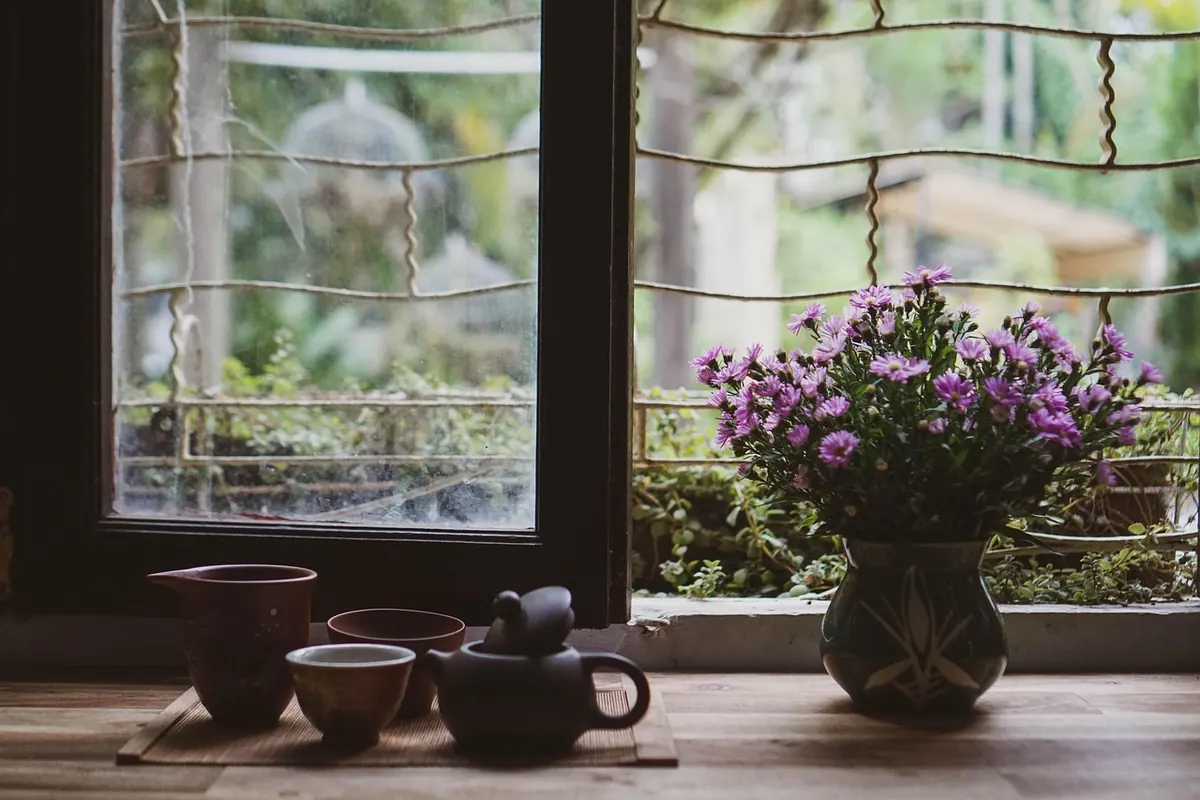
Yixing clay is unglazed and slightly porous, which is why it's famous for teapots. Cups made from it tend to be small, often 40 to 80 ml, with thick walls and a low, rounded profile. Two consequences follow. The tea stays hot through the whole cup, which suits slow sipping. And the clay softens the sharper edges of a brew: bitterness reads rounder, roast reads sweeter, and the most volatile top notes get muted.
That's a good trade for ripe pu'er, roasted oolong, aged oolong, and heavier dark teas. It's a poor trade for a delicate green or a first-flush Darjeeling, where the entire point is the high, bright aroma.
Because unglazed clay picks up scent over time, most people keep one cup or one set for one family of teas. If that sounds fussy, rinse the cup with hot water and let it dry upside down, and skip the soap — detergent residue in porous clay is hard to remove and tastes like nothing you want in your tea.
The Western mug: volume, heat, and a wide mouth
The standard mug holds 250 to 350 ml, has straight or slightly tapered sides, a thick rim, and a handle. It's built for volume and for warming your hands, and it does that well. Mugs are the right vessel for long infusions, chai, herbal blends, and breakfast teas you drink while doing something else.
The trade-offs are predictable. A wide mouth releases aroma fast, so you smell less. A large volume of water to a small amount of leaf makes a thinner brew unless you use more tea. And if you leave the leaves or a teabag sitting in the bottom, the last third of the cup steeps into something harsh.
Three fixes:
- Use a basket infuser and lift it out when the tea is ready.
- Preheat the mug with hot water — the ceramic mass steals a surprising amount of heat from the first pour.
- Fill to two-thirds rather than the brim, so there's less tepid tea at the end.
The tulip cup: built for aroma
A tulip cup tapers at the base and flares at the rim, usually in thin porcelain, holding 60 to 100 ml. The narrow bottom concentrates the liquid, and the flared top gives your nose room to work. Aroma rises like smoke through a chimney, and the thin rim lets tea cross your lip in a small, clean sip rather than a mouthful.
High-aroma teas reward this: dan cong oolong, Taiwanese high-mountain oolong, first-flush Darjeeling, jasmine, sencha — anything where you want the top notes before the body arrives. The trade-off is capacity and heat. Small pours cool fast, so you refill more often. Many drinkers keep a tulip cup alongside a gaiwan or small pot and top it up every few minutes, which is really the point.
Matching cup to tea
If you remember one rule, make it this: thin and narrow for aromatics, thick and wide for body and heat.
- Green and white tea — gaiwan or tulip cup, thin porcelain, small pours.
- Jasmine and scented teas — tulip cup; the aroma is the tea.
- Light, high-mountain oolong — gaiwan or tulip cup; keep heavy clay away.
- Roasted oolong, ripe pu'er, aged teas — Yixing cup or another small, thick-walled cup.
- Breakfast blends, chai, herbal — Western mug with a basket infuser.
- Tea you're unsure about — porcelain. It tells you the truth.
How to test this for yourself
You don't need a shelf of cups to notice the difference. Brew one aromatic tea, an oolong works well, and pour it into three vessels at once: a mug, a thin porcelain cup, and a small clay cup if you have one. Then:
- Smell each cup before you sip. The narrow one will hit harder.
- Sip from each while the tea is still hot, then again after five minutes. Notice which one you actually want more of.
- Check the last mouthful. That's where wide, deep cups with leaves still steeping give themselves away.
Let the tea cool to a comfortable sipping temperature before you judge anything. Scalding sips hide flavor and aren't pleasant; a few minutes makes a real difference.
If you already own two or three cups, use them deliberately for a week — gaiwan for greens, mug for mornings, clay for evenings — and your hands will start choosing before your head does. Buy slowly. One good thin-porcelain cup and one clay cup cover most of what everyday tea drinking asks for.
Photo: roszred / Pixabay