October 13, 2026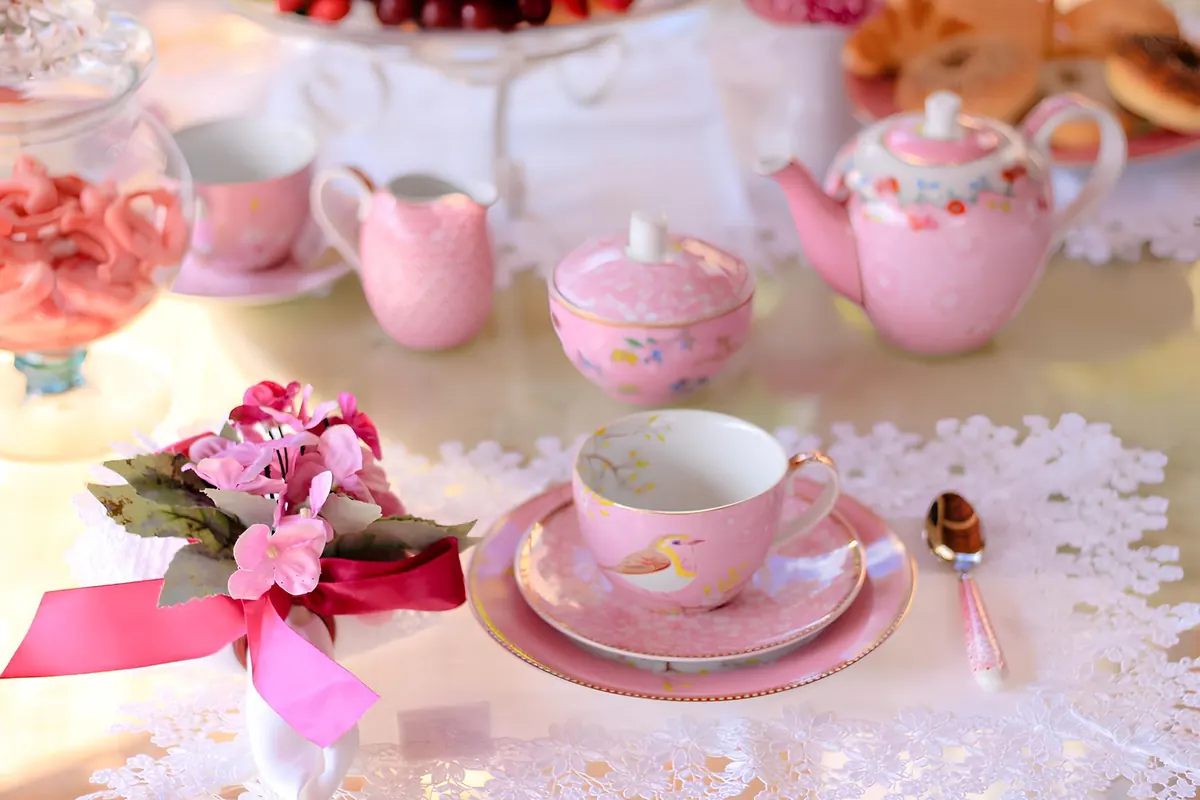
Six is the easiest number for afternoon tea and somehow the hardest to get exactly right. With four guests, one pot does the whole job. With ten, you need borrowed china and a second pair of hands. At six, you have just enough people for a proper three-tier table and still enough room in the kitchen to keep up with the kettle. What follows is the countdown that works: what to buy, how many pots and cups to put out, and the order in which things should reach the table.
Do the Pot-and-Cup Math First
Most afternoon tea disasters start with underestimating tea. A standard teacup holds 150 to 180 ml (about 5 to 6 oz), and guests at a sit-down tea will drink three to four cups across the afternoon — more if the food is salty, fewer if you are also pouring something sparkling. For six people, that is roughly 20 to 24 cups, or somewhere near 3.5 litres of brewed tea.
No single pot covers that. Work in two brews instead. A 1.5-litre pot pours eight small cups, so two rounds of brewing will carry you through, provided a fresh kettle goes on while the first pot is still circulating.
Brewing ratio: one heaped teaspoon (about 2 to 3 g) of loose leaf per 200 ml of water, plus one extra spoon "for the pot." That makes a 1.5-litre pot about eight teaspoons. If you are using bags, two per person plus two for the pot is a reliable habit.
Your equipment list, then:
- Two teapots — one large for your main black tea, one smaller for a green, oolong or caffeine-free option
- Eight teacups (one per guest, plus two spares for breakages or refills)
- Saucers, small spoons, and a strainer per cup if you brew loose without infusers
- A small milk pitcher, a sugar bowl with tongs, and a dish of lemon slices
- A thermal carafe or an insulated kettle so you are not boiling water every twelve minutes
The Countdown: Two Weeks to One Day Before
Front-load the boring decisions so the day itself is mostly assembly.
- Two weeks out: Send invitations with a start and end time — 3:00 to 5:00 is generous without dragging. Ask about allergies, dietary needs, and whether anyone avoids caffeine.
- Ten days out: Build the menu. Per person, plan four to six savoury bites, one scone, and three or four small sweets. Afternoon tea food is rich, so the portions stay small.
- One week out: Count your china honestly. Borrow or rent what you lack rather than buying a set you will use twice a year.
- Five days out: Make the things that keep — shortbread, lemon curd, a fruit cake, scone dough shaped and frozen raw on a tray.
- Two days out: Shop for perishables, order good bread sliced thin, and confirm the cream and butter.
The Day Before
Set the table now, not tomorrow. Lay the linens, polish the cutlery, and wash the teacups by hand so no dishwasher film dulls them. Decide where the three-tier stand will sit — centre of the table, with plates stacked at one end and napkins at the other.
Then build a tea station: a side table within arm's reach of your seat, holding the pots, the kettle, spare cups, the milk, and a small pitcher of hot water for anyone who finds the brew too strong. Carrying a full pot across a room while six people watch is the fastest way to lose your calm.
Leave the sandwiches and scones for tomorrow. Both suffer overnight, and egg or chicken fillings should be made and refrigerated the morning of, then kept cold until serving.
A Morning-Of Timeline for a 3:00 Start
- 10:00 am — Clear the tea station, fill the kettle, set out jam, curd, cold butter, and clotted cream in the fridge.
- 11:00 am — Bake the scones. Cool them on a rack and cover with a clean towel; they hold well for a couple of hours.
- 12:15 pm — Eat something yourself. Hosts who skip lunch get shaky halfway through the second pot.
- 1:00 pm — Make the sandwiches. Cut the crusts, pack them snugly, and cover with barely damp paper towel and film so the bread does not curl. Refrigerate.
- 1:45 pm — Fill the teapots with hot water to warm them. Empty just before brewing.
- 2:15 pm — Bring out the cold items and the sweets. Arrange the sandwiches on the stand's bottom tier but keep the extras covered in the kitchen.
- 2:40 pm — Boil the first kettle. Fill the small pot with hot water for green tea later.
- 2:50 pm — Music on low, kettle reheated, and five minutes sitting down before the doorbell.
Serving in Three Waves
The traditional order is savouries, then scones, then sweets — and it exists for a reason. Sandwiches meet a savoury appetite, the scones deliver the jam-and-cream moment while everyone is still hungry, and the petits fours land when people are slowing down and the last pot is steeping.
Do not crowd the stand in advance. Scones go leathery and cut sandwiches dry out within the hour. Instead, give each wave twenty to twenty-five minutes: bring out the sandwiches, clear the empty plates, then take the stand back and reload it for scones. It reads as attentive rather than fussy, and it gives you a natural reason to check the kettle.
For the scones, put the cream and jam on the table with a small knife each, and let guests argue about the order. They will.
Keeping Six People in Tea
Brew in shifts rather than one enormous pot. While one pot is on the table, a second is steeping or waiting under a cosy. Use freshly drawn water each time — water boiled twice tastes flat and dulls the leaf.
Temperature matters more than most hosts expect. Black teas want water just off the boil, around 95°C. Green and oolong teas prefer 70 to 85°C, which is why a splash of cold water in the pot before the kettle is a useful trick. Herbal infusions take fully boiling water and can sit longer without turning bitter.
Keep the milk in the fridge until the first pour, top up cups without being asked, and delegate one small job to a willing guest — refilling water glasses is a good one. Six people is few enough that you can sit down between waves, which is the entire point of holding tea at home.
The Only Real Job You Have
Everything above is scaffolding for one thing: being at the table. If the second pot is slightly late, or one batch of scones is a little pale, nobody will remember. They will remember whether you sat with them.
So write the timeline on a card, tape it inside a cupboard door, and then ignore it once the first pot is poured. Refill, pass, listen. The dishes can wait until the last guest has gone home and the candles have burned down.